 Jopiggy Tools
 Fun & Testing
Test your reflexes with three modes: lightning reflex, aim strike, and dual choice decision-making. Track your reaction time and compare with averages.
How fast are your reflexes? Reaction time is a key indicator of neural efficiency, relevant to everything from driving safety to gaming performance. Our reaction test tool offers three progressively challenging modes to measure and improve your response speed.
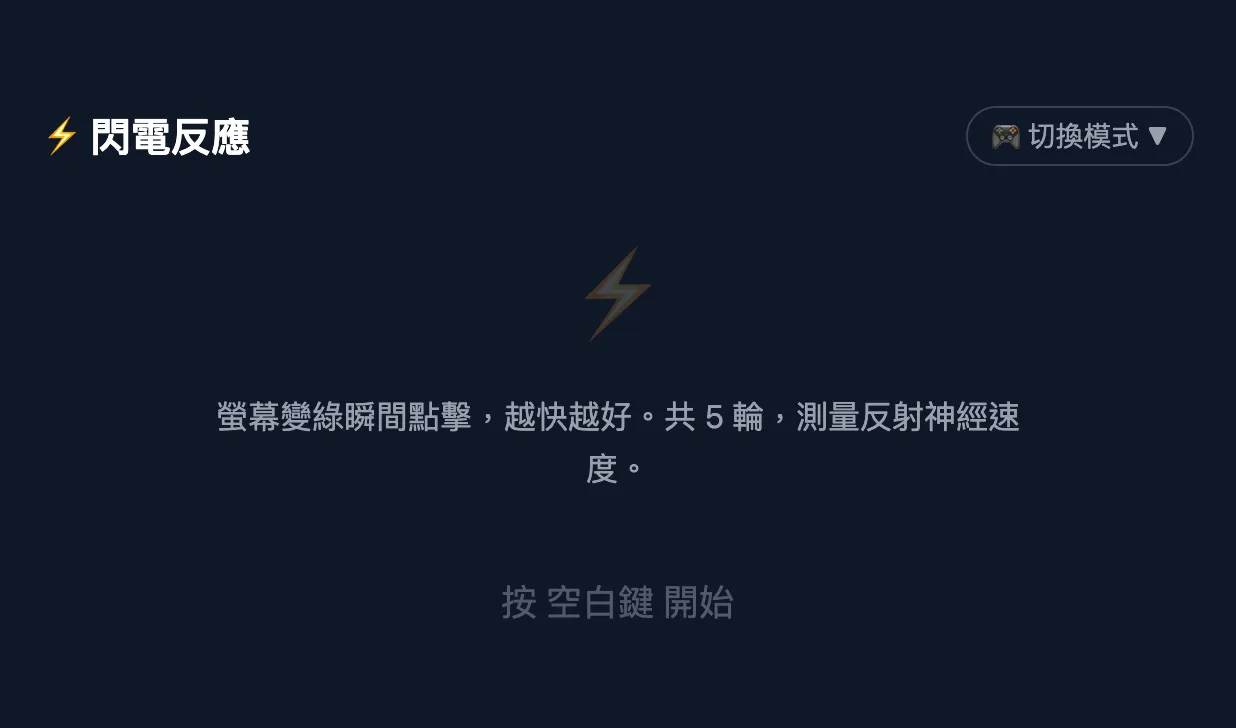
Lightning Reflex mode measures your basic visual reaction time. After a random 1-5 second delay, the screen changes color — click as fast as you can. Five rounds are averaged and rated: under 150ms (Lightning, pro-gamer tier), 150-220ms (Quick), 220-300ms (Normal), above 300ms (needs practice). The average adult scores 200-250ms.
Aim Strike mode adds hand-eye coordination under time pressure — hit randomly appearing targets within 15 seconds, earning bonus points for speed and combo streaks (up to 5x multiplier). Dual Choice mode introduces decision-making: red means press left, blue means press right. This measures choice reaction time, typically 50-100ms slower than simple reaction time, and better reflects real-world cognitive demands.